Banking-Grade APIs: Patterns for Fintech Builds in 2026
When engineers from the consumer software world build their first fintech product, the most common surprise isn't the regulation — it's the API design discipline.
Web APIs that handle blog posts, social feeds, or even most SaaS workflows tolerate a lot of imprecision. A duplicate POST that creates two records is an annoyance. A lost response that the client retries is a retry. A race condition between concurrent updates is "last write wins."
Banking APIs don't tolerate any of those. Each one becomes a money issue — duplicate transactions, lost payments, race conditions that produce wrong balances. The design discipline that produces "banking-grade" APIs is different from the discipline that produces "web-grade" APIs.
This is the patterns guide. What banking-grade actually means, and the specific design decisions we make on fintech engagements that earn the label.
Key Takeaways
- Banking-grade is not web-grade with extra paperwork. Every operation has a correctness invariant (idempotency, atomicity, ordering, durability, auditability) that the design enforces — not that the team hopes for.
- Idempotency keys are required headers on every state-changing operation, propagated through the entire request chain. Repeated requests with the same key return the cached response, exactly once.
- A POST that "creates" a transfer is creating a transfer request. Model time-dependent operations as state machines (submitted → authorized → cleared → settled), not single-state resources.
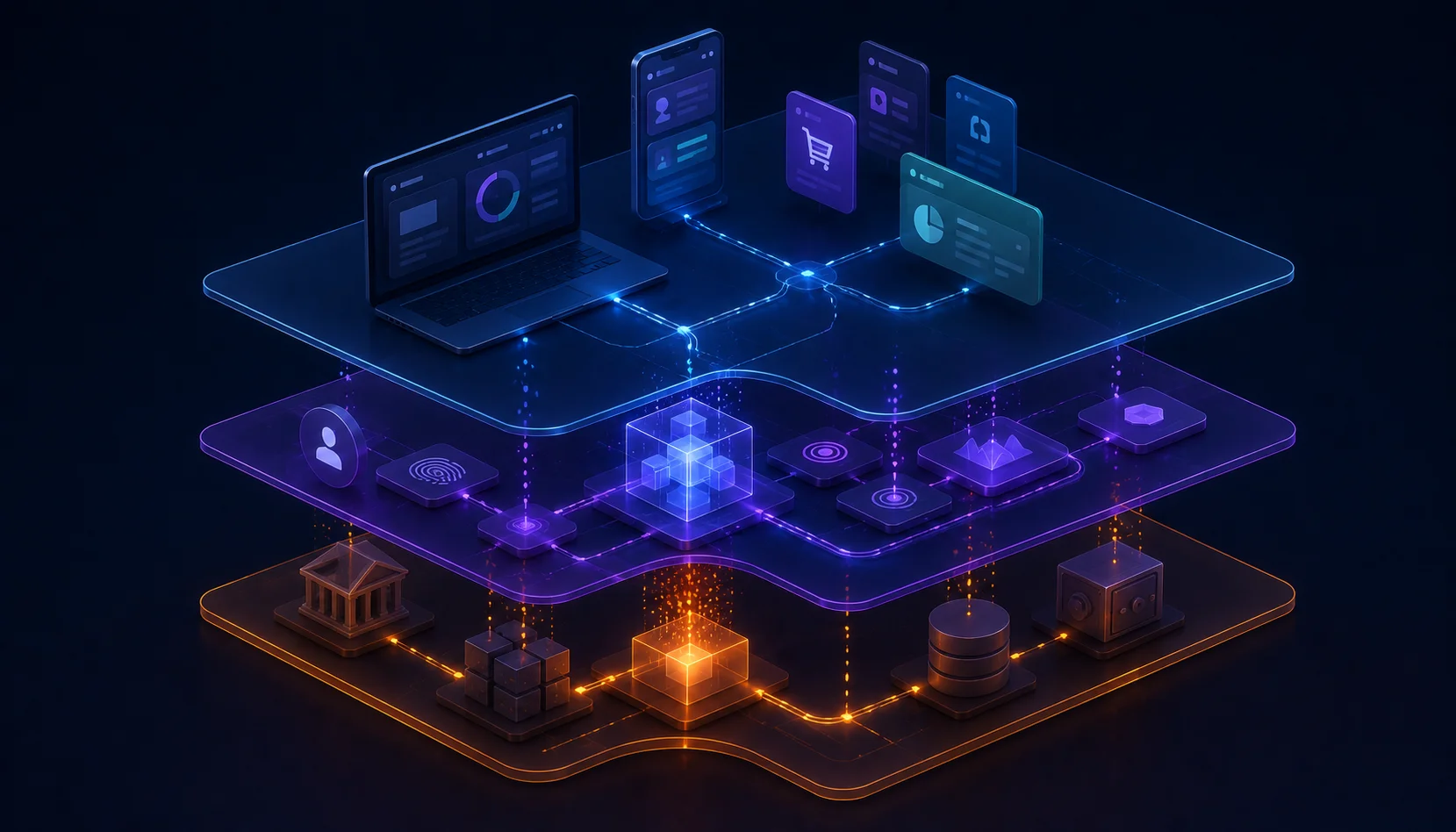
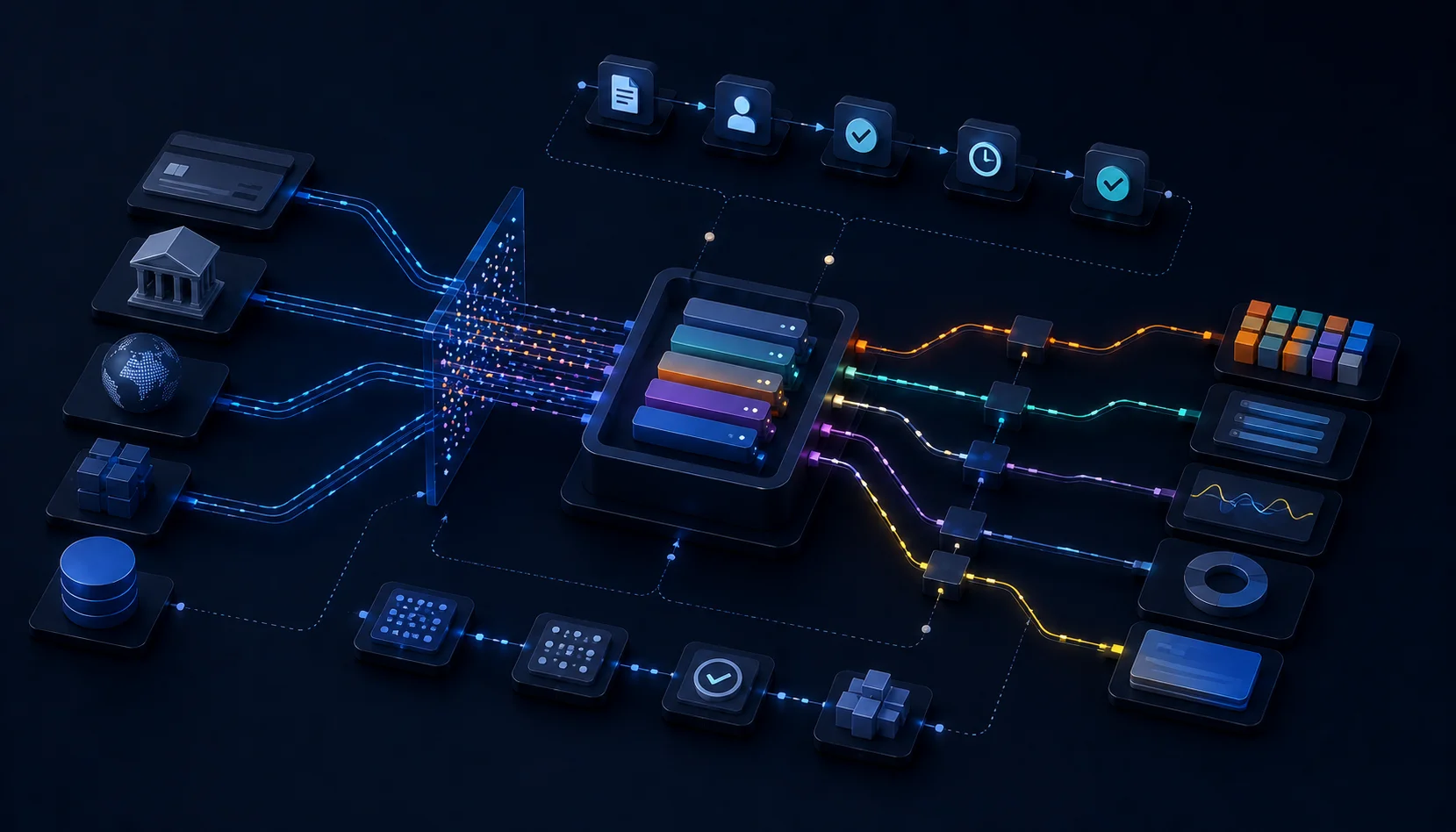
- A modern banking API speaks polyglot: ISO 20022 (instant payments, SEPA), ISO 8583 (card networks), NACHA (US ACH), MT (SWIFT wires), Open Banking REST. Translate at the gateway; internal services see a canonical model.
- Banking-grade design adds 30–50% to v1 engineering cost and cuts ongoing incident/maintenance cost by 50–70% over the product's lifetime.
The defining property: every operation has a correctness invariant
In a banking-grade API, every operation has a correctness invariant that the design enforces, not just hopes for.
The invariants:
- Idempotency. Repeated requests with the same idempotency key produce the same result, exactly once.
- Atomicity. Operations that touch multiple records (e.g., debit one account, credit another) succeed or fail as a unit, never partially.
- Ordering where it matters. Some operations have ordering constraints (e.g., a refund can't precede the original charge); the API enforces them.
- Durability before acknowledgment. A successful response means the operation is durably persisted, not "we received the request and will probably do it."
- Auditability. Every operation produces an audit record sufficient to reconstruct what happened at any later point.
- Reversibility (when meaningful). Operations that can be reversed have a well-defined reversal path; operations that can't are flagged as such in the API contract.
A banking-grade API design is the set of patterns that make these invariants true under realistic production conditions — network failures, retries, concurrent operations, partial database failures, processor outages.
Idempotency at the API contract level
The idempotency invariant has to show up in the API contract. Common patterns:
Idempotency key as required header.
POST /v1/transfers
Idempotency-Key: 550e8400-e29b-41d4-a716-446655440000
Content-Type: application/json

{
  "from_account": "acct_123",
  "to_account": "acct_456",
  "amount": 10000,
  "currency": "usd"
}
The server stores the (idempotency key, request hash, response) tuple. Repeated requests with the same key return the cached response. Conflicts (same key, different request body) return an error.
Conditional updates with ETags.
For operations that update existing resources, clients should be able to assert "I'm updating the version I saw":
PATCH /v1/accounts/acct_123
If-Match: "v_42"

{
  "metadata": { "category": "savings" }
}
If the server's version has moved past v_42, the request fails with a 412 Precondition Failed, preserving the lost-update invariant.
Resource-level idempotency for natural-key operations.
For operations where the "right" identifier is in the request body (e.g., creating a transfer with a client-supplied reference), the idempotency key can be derived deterministically from request content. This catches "client retries with the same transfer request" without requiring a separate idempotency key.
Settlement vs booking — the timing reality
In conventional web APIs, you POST a thing and it's created. Done.
In banking APIs, a POST that "creates" a transfer is really creating a transfer request. The transfer goes through:
- Submission — the API accepted the request
- Authorization — the issuing bank approved the operation
- Clearing — the operation is in transit between banks
- Settlement — actual money has moved between bank accounts
Each phase can take anywhere from seconds (RTP, FedNow) to days (ACH, international wires). Operations can fail at any phase.
The API design implication: state machines, not single-state resources. A Transfer resource has a state field that progresses through submission → authorized → cleared → settled. Or fails at any step.
Clients can subscribe to webhook events for state transitions. Polling APIs return current state with a next_status_at estimate for clients that need timing predictions.
The wrong pattern: an API that returns "success" for the submission phase and lets clients believe the money has moved. That's the bug class that causes "I sent the wire but it's not in my account" customer support tickets.
Message format polyglot — the unglamorous reality
A modern banking API talks to:
- ISO 20022 for SEPA, instant payments, cross-border wires (the newer standard, XML-based, increasingly required)
- ISO 8583 for card network messages (the older standard, binary message format, won't go away)
- NACHA files for US ACH (text-based, batch-oriented, comes via SFTP)
- MT messages for SWIFT international wires (text-based, format codes, increasingly being replaced by ISO 20022 but still common)
- FedNow / RTP ISO 20022 dialects
- Open Banking REST/JSON for account aggregation, payment initiation, balance queries (PSD2 in EU/UK, similar regimes elsewhere)
The architectural pattern: an internal canonical message format that all of these get transformed to/from at the API gateway layer. Internal services see a consistent shape; external integrations have their own adapter per format.
The work is mostly translation, error handling, and the operational quirks of each ecosystem. ACH return codes are different from card decline codes are different from SWIFT failure messages. Each has to be normalized to a consistent error taxonomy.
Reconciliation as part of the API surface
Banking APIs expose reconciliation data because customers need it. Patterns:
Settlement endpoint.
GET /v1/settlements/sett_2025_06_12
Returns the settlement report for a specific date — which transactions cleared, fees deducted, currency conversions applied. Clients reconcile this against their own booking records.
Disputes and chargebacks endpoint.
GET /v1/disputes?status=open
Surface chargebacks and disputes as first-class resources, not buried in transaction state. Clients build dispute-handling workflows on top.
Audit log endpoint.
For higher-tier customers, expose an audit log of operations on their account. Useful for compliance, useful for customer-side reconciliation.
Banking-as-a-service integration patterns
Most modern fintech products integrate with banking infrastructure via banking-as-a-service (BaaS) providers — Treasury Prime, Unit, Synctera, Column, etc. The integration patterns:
The BaaS provider as your bank rails.
You don't have a direct bank relationship; the BaaS provider does. Your API calls go through their API; they handle the actual bank interaction. Onboarding takes weeks because their compliance team has to approve your program. The technical integration takes maybe 4-8 weeks; the compliance onboarding adds 4-12 weeks.
Open banking aggregators for read-only data.
Plaid, MX, Finicity, Yodlee. Connect to consumer accounts at thousands of banks; expose a unified API for balance, transactions, identity. Used heavily for KYC, account verification, transaction-history-based underwriting.
Direct bank partnerships for specific use cases.
When the BaaS providers don't cover what you need (specific niche, specific geography, specific custody requirements), direct bank partnerships are the path. Slower, more expensive, but possible. Common for fintechs that grow large enough to outgrow BaaS pricing.
What "banking-grade" looks like in production
After enough fintech engagements, the markers of banking-grade API design:
- Idempotency keys required on all state-changing operations. Not optional, not recommended — required.
- Webhooks with signature verification, replay protection, and ordered delivery for the same resource.
- Errors with structured error codes mapped to user-actionable categories. Not just "500 Internal Server Error."
- API contracts with explicit reversibility and ordering guarantees documented per operation.
- State machines for operations that take time, with subscribable webhook events for transitions.
- Reconciliation data as part of the API, not a manual report download.
- Versioned API with documented deprecation timelines. Banking systems integrate with you for years; breaking changes are expensive.
- SLAs on every endpoint with monitoring that produces evidence of compliance.
- Audit log accessible to customers for their own compliance needs.
When we evaluate fintech codebases that have grown organically, the ones that have these properties have built banking-grade APIs whether they called them that or not. The ones that don't have them accumulate the bug classes you'd expect: duplicate transactions, lost payments, customer disputes that take weeks to reconcile.
Pricing implications
Banking-grade API design costs more upfront. The upfront cost typically:
- 12-20 weeks for a v1 that has the invariants properly designed in
- Higher operational overhead for monitoring, reconciliation tooling, webhook delivery infrastructure
- More careful release process — banking APIs don't get to ship at consumer-software pace
The compounding benefit:
- Lower ongoing operational cost because the bug classes that produce customer-impacting incidents are designed out
- Faster compliance audits because the audit trail is structured for it
- Better partnership negotiations with BaaS providers and direct banks — they evaluate your API quality during diligence
- Faster customer onboarding because enterprise customers' integration teams can move quickly against well-designed APIs
The rough heuristic: banking-grade adds 30-50% to v1 engineering cost and reduces ongoing incident/maintenance cost by 50-70% over the lifetime of the product.
If you're designing banking-grade APIs for a new fintech product or modernizing one that's accumulated debt, we'd be glad to talk. See our fintech software development services, the PCI-DSS architecture guide, and the Payment Orchestration deep-dive for the production patterns that sit on top of banking-grade APIs.